

Issue Zero · Part II · Plate 02
Growing Up in Public
Jimmy Sotos goes to Netflix on May 13. The harder show he’s already in is the one without a release date.
There’s a back table at Cupitol Coffee where a basketball player has been doing the slow work of figuring out who else he could be. Acting and creativity emerged as side effects.
This is, on its face, a strange sentence. Basketball players are not, as a class, expected to learn eyeline discipline. They are not expected to figure out three-point lighting on YouTube tutorials between training sessions, or to become competent enough at iPhone editing to film themselves playing eight different versions of themselves in the same coffee shop on a Tuesday. They are expected, depending on the era you grew up in, to either go pro or pivot to broadcasting, and most of them do.
Jimmy Sotos spent twenty years preparing for the first option. The second was always available to him. He did neither.
What he did instead, after coming back to Chicago and setting the ball to the side to see where else he could bounce, was reach out to coffee shops around the area and ask if anyone would let him use their space as a set. Cupitol said yes. Over the next several weeks, in the corners of a working café, he shot eight episodes of a self-written, self-directed, self-edited reel series in which he plays — in different costumes and lighting and pacing — eight versions of himself, all sitting across from each other, all trying to figure out what the others are doing.
There is no production company behind it. No network. No agent’s notes in the margins. For years he had been pitching networks and production companies on other things — different formats, different ideas — and getting back the most familiar pattern in the modern entertainment business: polite encouragement that never converted into a greenlight. So he stopped waiting. He taught himself everything. And he made the thing himself.
We’re calling this Cover Story No. 02 because we think the work deserves more than a Reels grid.
It is also a story we suspect we will be telling again, in different forms, for a long time. Something specific is happening at the intersection of basketball, an audience that doesn’t go home, and the creator avenues now available to anyone with a camera and the discipline to use it. The result is a quiet generation of athletes taking unexpected paths into entrepreneurship and self-discovery — the two braided into the same person, the same year, sometimes the same Tuesday. Jimmy’s journey is one version of it. We will meet others.
A fine line, walked daily.
Most creators we meet are walking a fine line every day.
On one side is the version of themselves the audience expects, that the brand sponsorships expect, that the platform’s algorithm rewards. On the other side is the version of themselves they actually are at 11 p.m. on a Tuesday when nothing is being filmed, when they’re tired, when they’re doubting the whole thing. Call this the persona tax — the small, daily cost of keeping the public version close enough to the private one that the gap stays honest.
The healthy version of the line is exhilarating. People who walk it well — who let the public self stay close to the private one — get to do something almost no one in the modern workforce gets to do: they get to make a living by becoming themselves. That is, in the strange new economy we’ve built, a kind of grace.
The unhealthy version is corrosive. The gap widens. The performance hardens. The 23-year-old version of you becomes a tomb you have to keep visiting. You start optimizing for what the audience already loves, which is, by definition, the version of you that’s already been. You stop becoming. You curate.

We mention this because Jimmy Sotos appears, against the gravity of his industry, not to care about the line.
When you watch him talk about basketball, he is a basketball player. When he talks about coffee — the Jump Shot Blend he made with Metropolis is actually good, and another blend is on the way — he is the version of himself who has been figuring out coffee. On Netflix, where his show is live now, he is the version of himself that wanted to go on Netflix, which, knowing him, is something between a goof and a goof who is taking it more seriously than he lets on. There is a free-spirit quality to Jimmy that resists the usual creator-economy compression. He is not optimizing his persona. He is just being many things, in front of people, at the same time.
That is rarer than it looks. It is also more vulnerable than it looks.
The series, which has no formal title, is in a literal sense a tour.
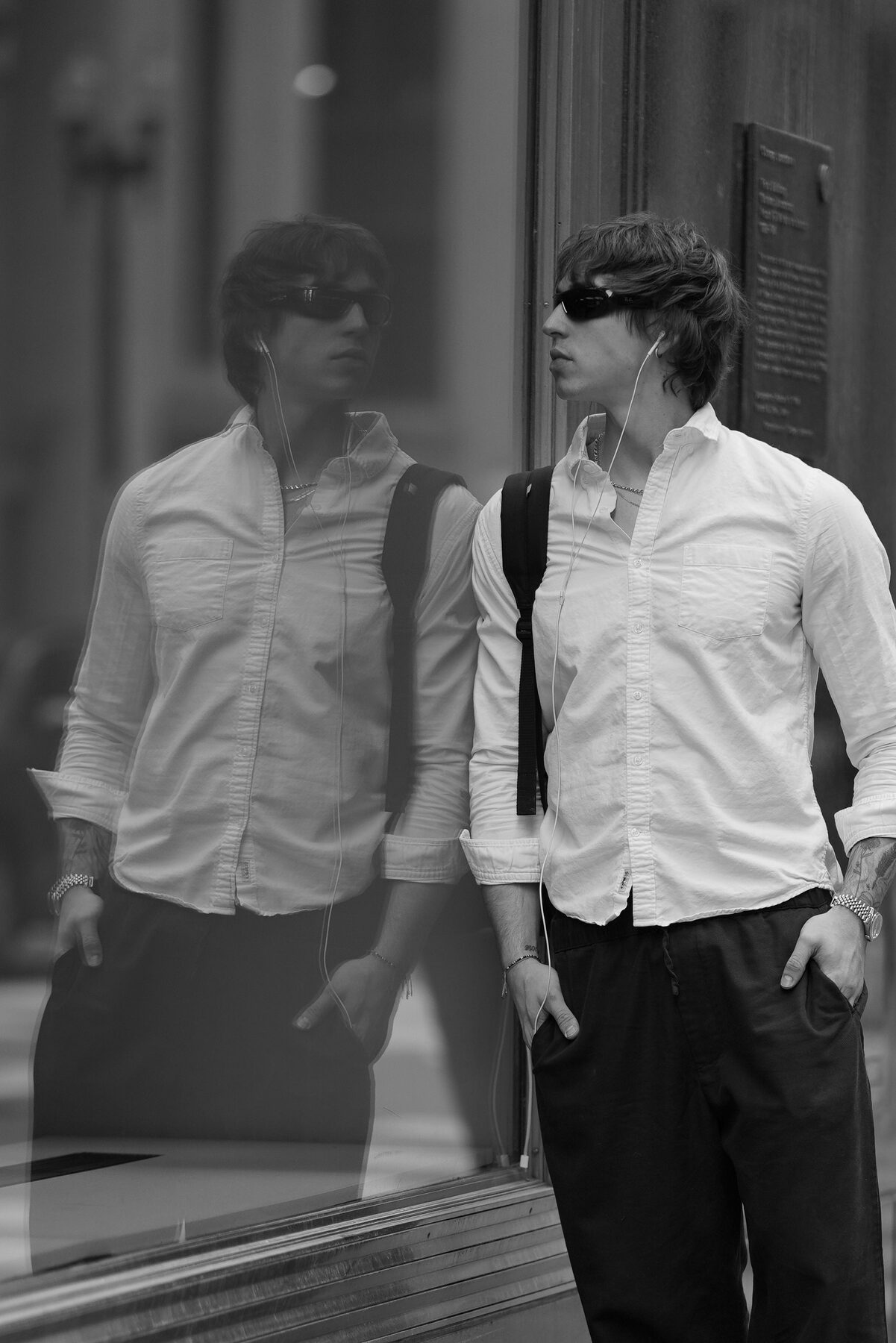
Each episode is a Jimmy in a different mental room. Coffee Jimmy is in the safe one — the connective fabric of the whole project, the persona he describes as “grounding, no pun intended.” Social Media Jimmy is in the loudest one, and the hardest. “Ever-evolving,” he calls it. “This landscape, you never know what direction it’s going to take.” Basketball Jimmy is in the room with the trophies on the shelf, the one Jimmy says he has “come to terms with.”
Younger Jimmy returns toward the end of the run. He is the Jimmy who didn’t yet know any of the others were coming.
The series did not stop at eight. New episodes have kept arriving since, and the cabinet keeps adding rooms.
The fact that Sotos shot all of them in the same actual room — the back table at Cupitol, where you can hear the espresso machine through the cuts — turns the metaphor into architecture. He went and built a real space inside a real space, and then visited each of his selves inside it.
The series is not subtle. It is not trying to be. It is a creator with a million-plus followers attempting, in front of all of them, to take a problem he has had since he was an athlete — I am more than just one thing, and I have not figured out how to be all of them at once — and stage that problem visibly, with comedy and a tripod, until enough other people see themselves in it that he is no longer alone with the question.
To live this way in public means to allow the audience — us — to watch you reach for things you might not catch. To watch you start a coffee company and have to explain it. To watch you go on a dating show and have it not work out, or work out, in either case in front of millions. To watch you be twenty-four, and then twenty-five, and then twenty-six, and have your taste change, your style change, your friends change, your sense of yourself change, and to do all of that while a feed full of strangers comments on whether they liked the old version better.
It would be easy, from our side of the screen, to consume that and forget it costs anyone anything.
There is a Mystery Jimmy.
Sotos won’t say who Mystery Jimmy is. He will tell you — laughing, evading, slightly delighted with himself — that Mystery Jimmy will not be revealed in the first eight episodes. Mystery Jimmy is, he said, Season 2. Mystery Jimmy is the door he hasn’t opened.
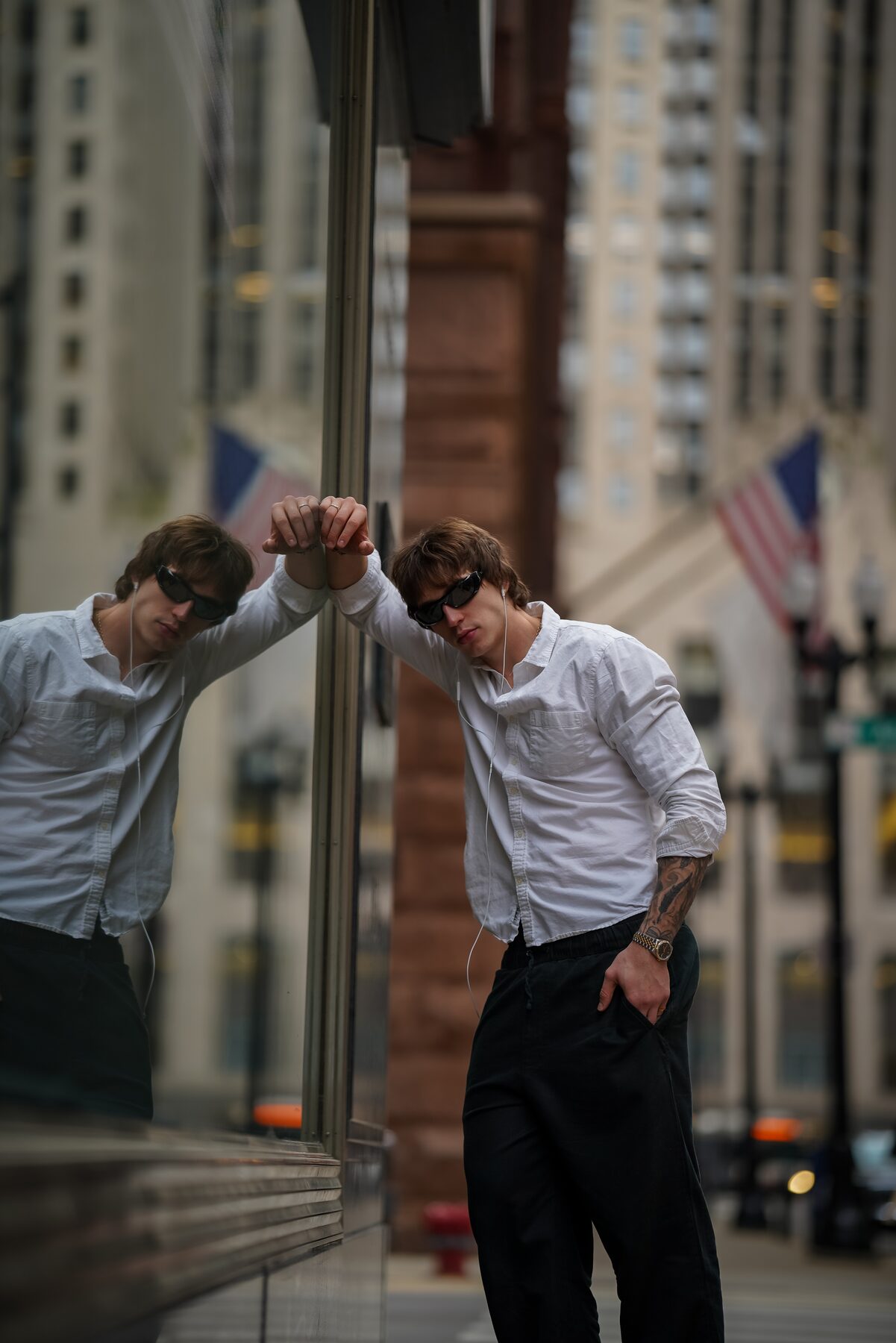
We mention this because it’s unusual.
The default mode of the creator economy is full disclosure. Every thought, every meal, every relationship status, every emotional spike, all produced and uploaded as proof of authenticity. Holding something back — withholding a character, a chapter, a version of yourself — is, in this environment, strange. It is the move of a writer, not a poster.
Sotos is making a lot of small writerly moves underneath the surface of this series, and Mystery Jimmy is the most telling. He has decided that a piece of himself does not yet belong to the audience. He is going to keep that piece for the second season. He is treating his own interior life with the discipline of someone making television, not the openness of someone making content.
This is the difference, in 2026, between a creator and an auteur. We don’t use that word lightly. We are using it because it fits.
Consumption is cheap.
We forget because consumption is cheap. We open the app. We scroll. We comment. We move on. The people in those squares look like content because they are, in fact, presented as content. The interface flattens them.
We are not given a way to see, at the bottom-right of the post, the small line that should be there:
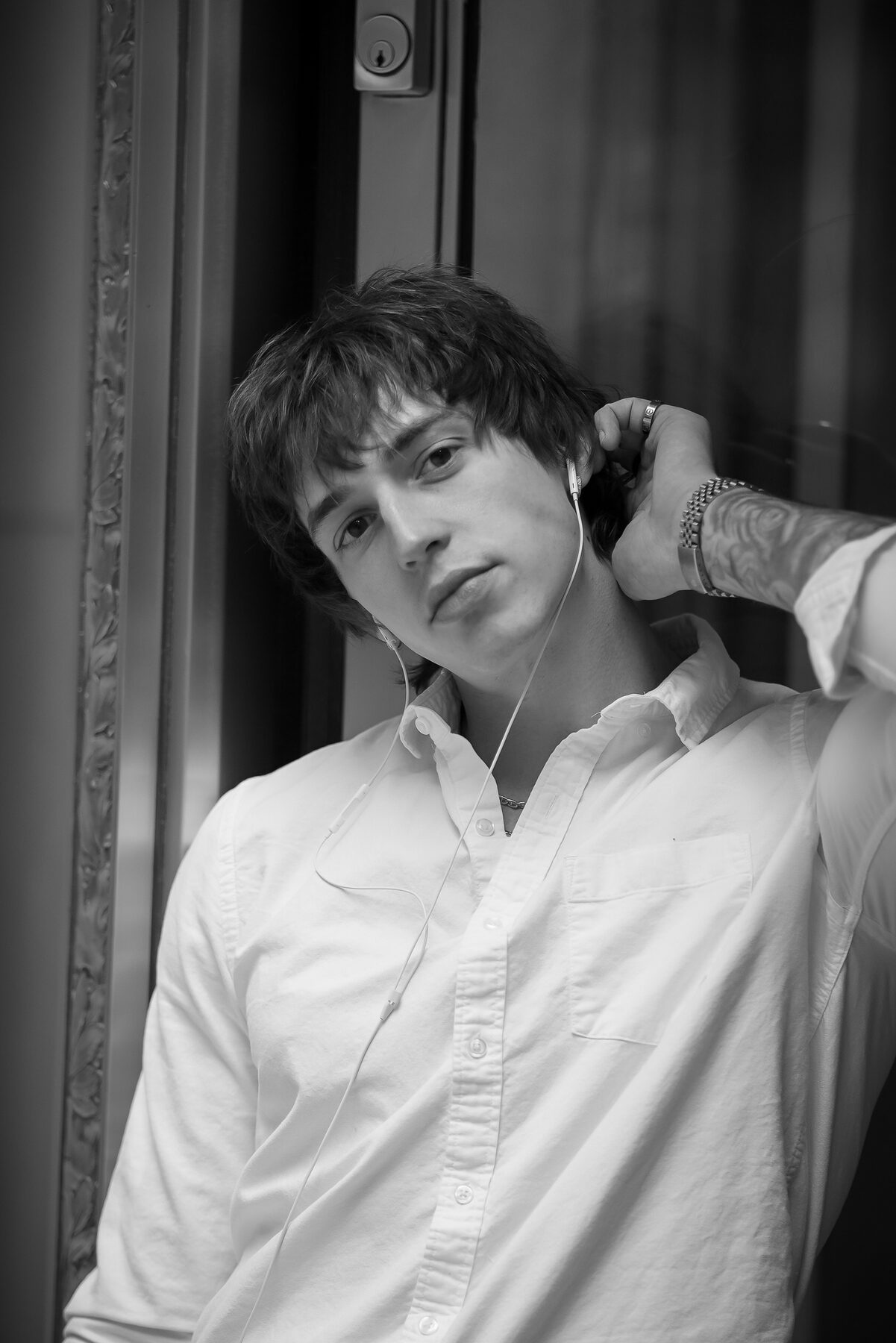
this person is also growing, and they are growing with you watching, and that is harder than you will ever know.
What we owe creators — what we at 248 think about often — is the recognition that the growth they’re doing in front of us is not a side effect of the content. It is the content. The reason a creator is worth following is not because they have everything figured out. It is the opposite. It is that they are figuring it out, in real time, in your feed, with a degree of vulnerability that almost no other career in modern life requires.
Jimmy Sotos has been doing that openly. He has been talking about coffee while becoming a person who knows coffee. He has been playing basketball while figuring out what basketball means after the college eligibility runs out. He has been on social platforms while figuring out what he wants to use those platforms to say. He is not pretending to have answers. He is showing his work.
We praise that. We think more creators should.
A back table, a tripod, and a refusal to wait for permission.
For years before the series existed, Sotos was pitching things to networks and production companies — different formats, different ideas, none of them precisely what he is now making. He told us about the rhythm of those conversations: “They liked me. They wanted to keep the conversation going. They didn’t want to commit to anything.” This is the most familiar paragraph in the modern entertainment business. People with platforms get told they are interesting, repeatedly, by people who have no intention of paying them to make anything.
Eventually, he gave up on the pitch.
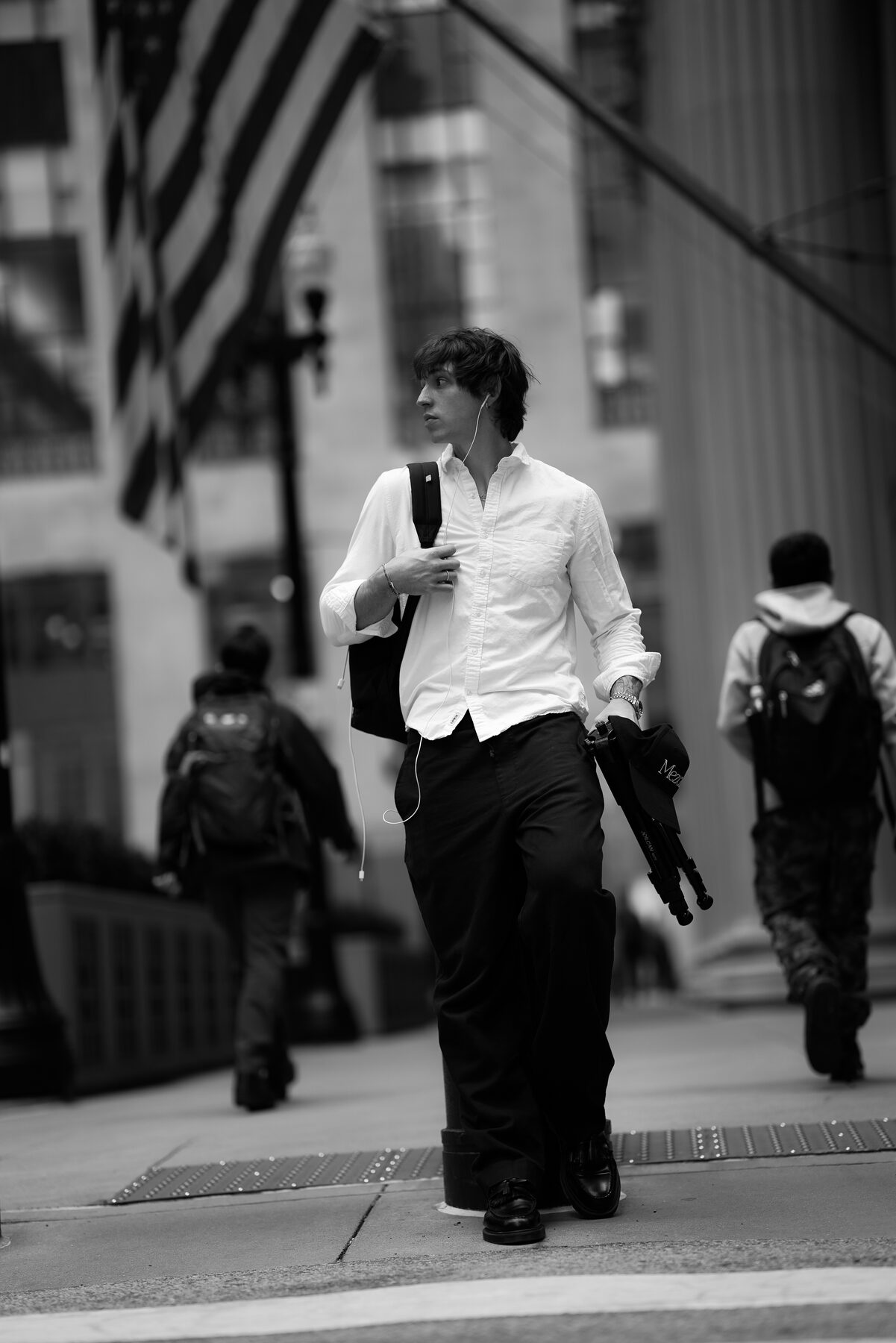
He taught himself, instead. Lighting. Camera angles. Eyeline discipline — the actor’s habit of looking at a fixed mark when there is no scene partner, so the cut to a different version of yourself feels like real human eye contact. He learned the discipline backwards, alone, on the floor of a coffee shop, by doing it badly until he stopped doing it badly.
He didn’t announce the series. He didn’t run a teaser campaign. He posted the pilot episode without warning, watched the response, and decided to keep going.
“There’s always going to be a reason not to do something right now. So I just dropped the pilot.”
Jimmy Sotos
There is a version of this story that’s about the failure of legacy media to see what was right in front of it. We’re not particularly interested in that version. The more useful version is what it tells us about where the next decade of cultural production is going. The platforms — and their hesitation, their gatekeeping, their endless let’s keep talking — are losing relevance to the people who can simply, when the platforms refuse to pay, go to a coffee shop and make the thing themselves. The cost of a tripod and a quiet room is low. The cost of waiting for permission is, finally, higher.
Sotos is one of the first creators we’ve covered who decided, on his own, that he was going to operate as both writer and studio. The work shows it. The work is good. The work would not exist if he had waited.
Now, the cameras travel with him to Netflix.
Jimmy Sotos joins Perfect Match Season 4 on Netflix — premiered May 13, 2026. The first five episodes are already streaming; the next two arrive May 20; the finale arrives May 27. People who have never watched Jimmy handle a basketball will recognize him. People who have followed him for years will see him next to strangers, in scenarios he didn’t write, being edited.
That is a step, not a destination. The same person who chose to put his name on a coffee blend instead of a corporate logo is going to have to keep choosing, after Netflix, what to be next. He has been showing us how that choosing happens. He will, presumably, keep showing us.
We will be here.
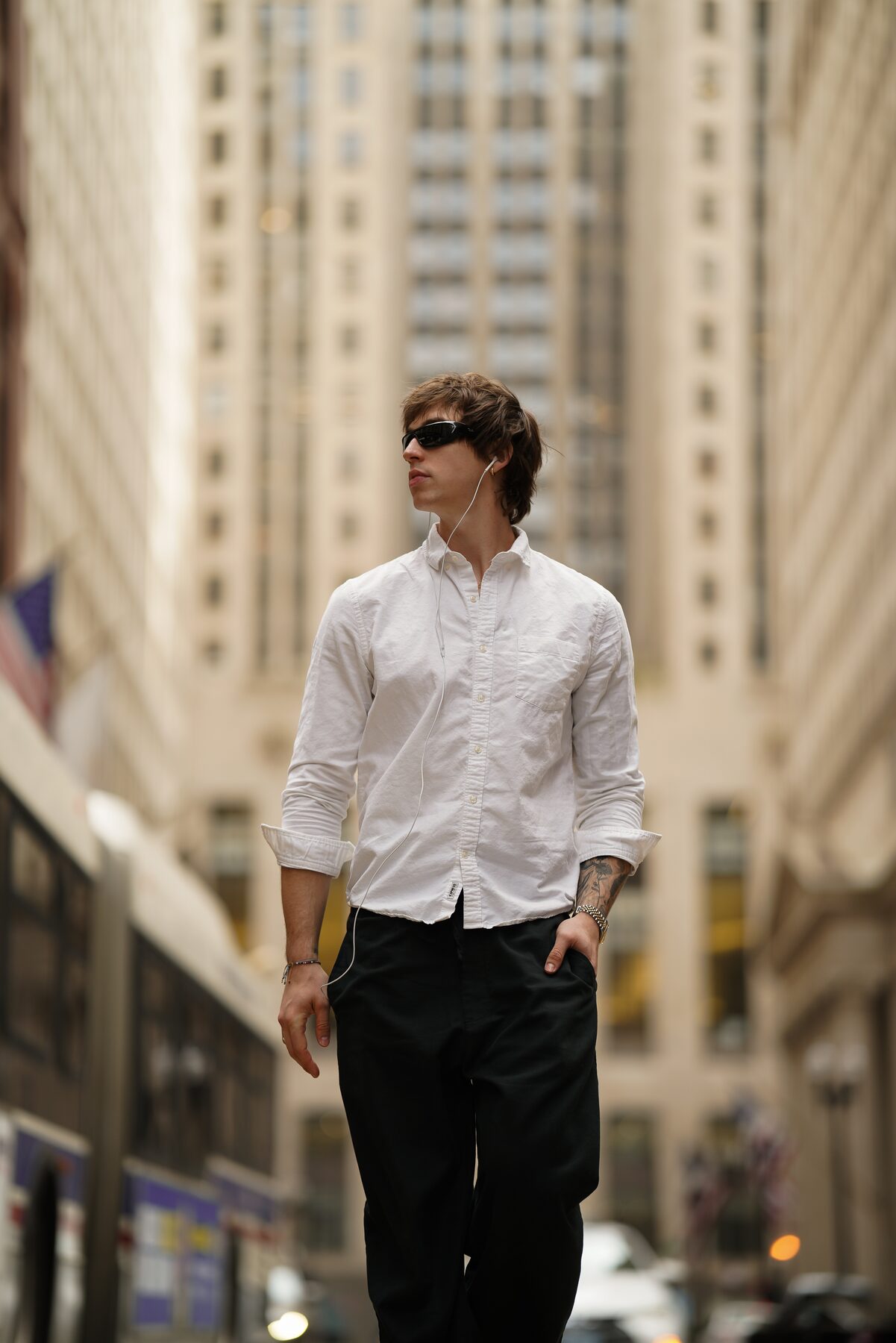
The honor of running a community like 248 is that we get to watch — alongside you — the creators who are willing to do their becoming in public. Jimmy is one of them. We praise his openness, his fluency in moving between rooms, and the unguarded honesty with which he keeps building forward.
The cup he built is real. The room nobody sees is real, too. So is the camera that’s about to travel with him to a beach somewhere.
It’s a hard, hard line to walk in front of so many people.
We’re rooting for the walker.
248 Cover Story No. 02 · Slow Press Issue Zero
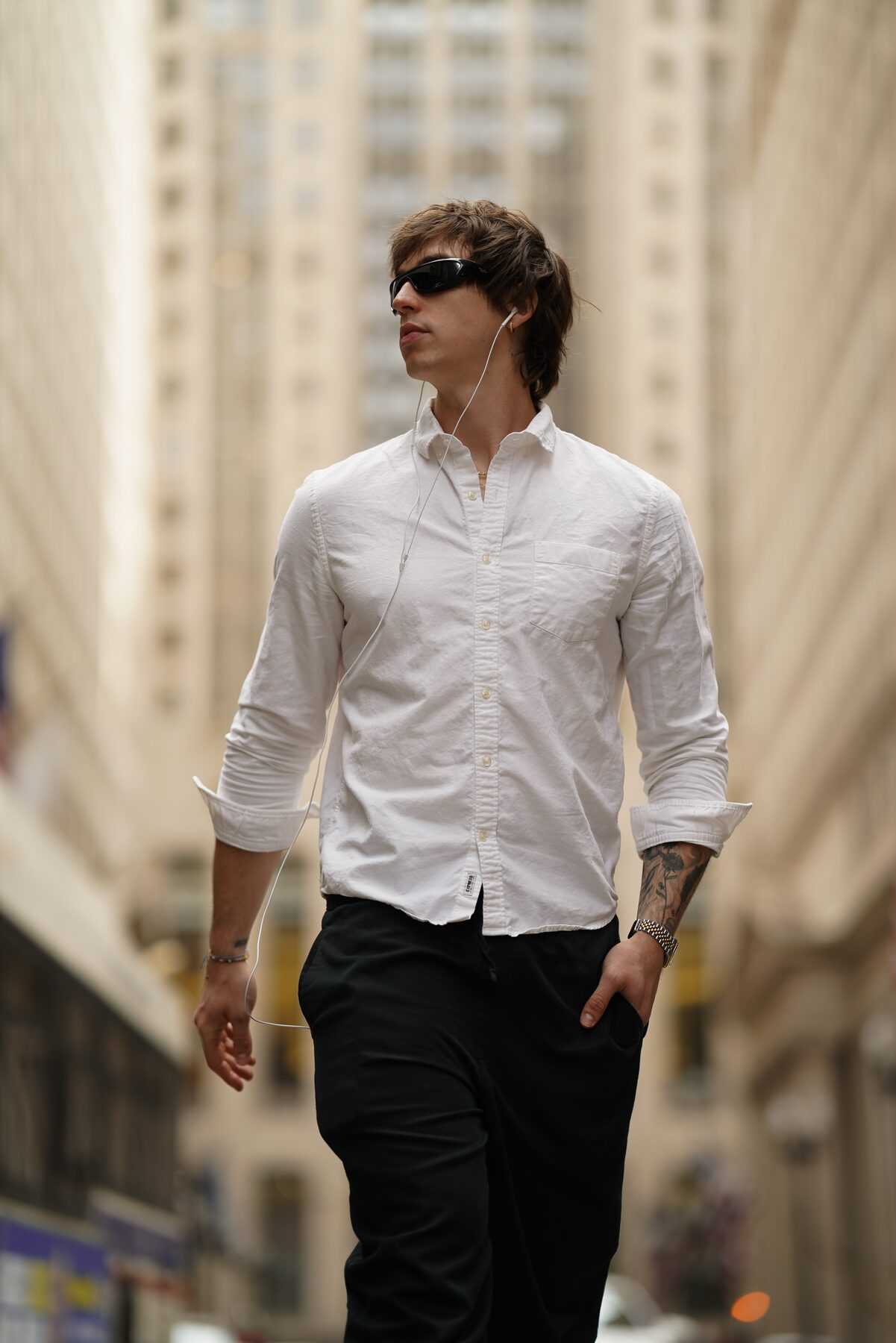
Photographs by Joss Angel
Companion to All of Him · Slow Press Issues · .app